


Content preparation and publishing service
The service gathers project materials into an editor-approved dossier, prepares case studies and posts for different platforms and publishes them on schedule
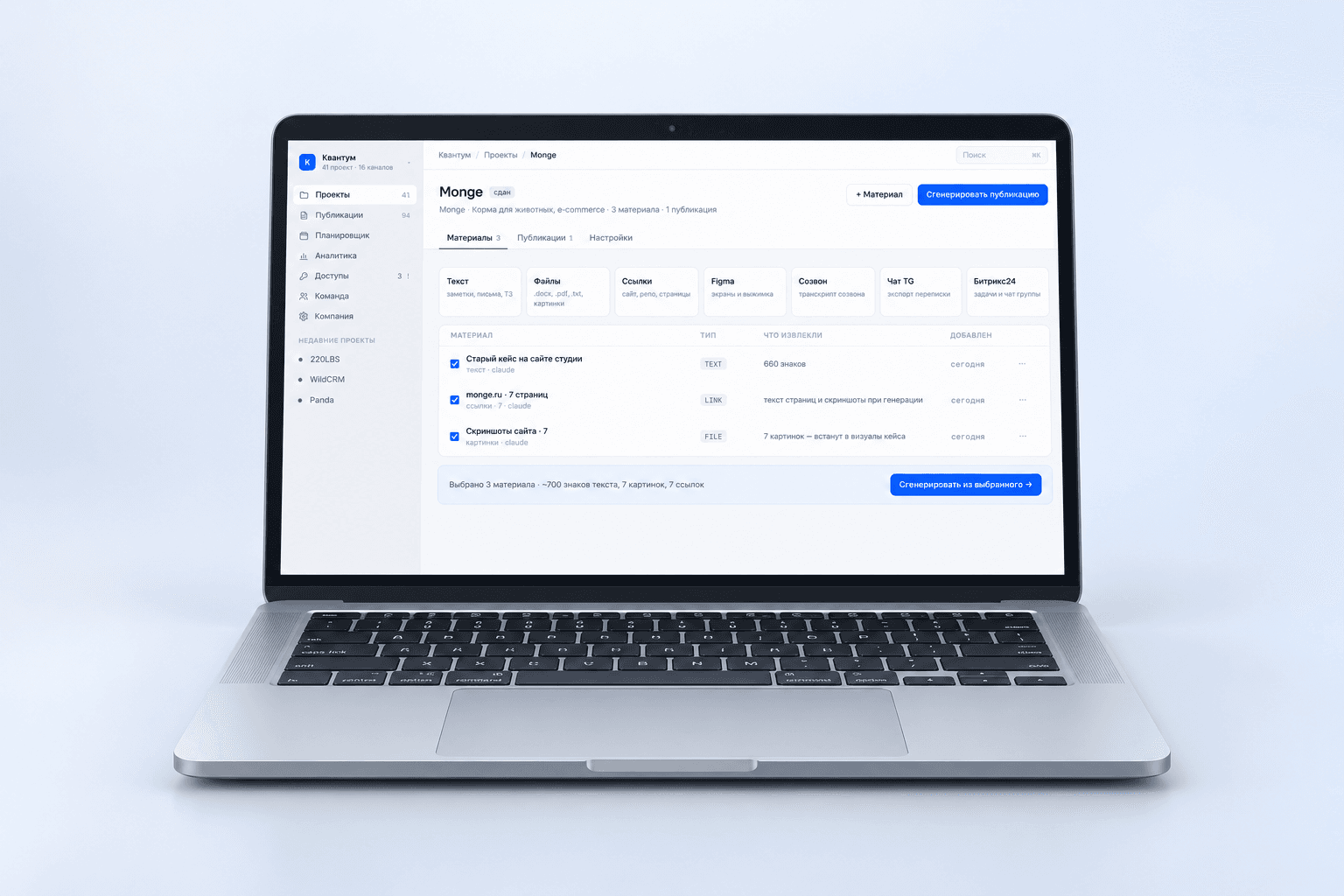
Project at a glance
Quantum Dev’s case studies used to be written by hand. The portfolio was going out of date, and there weren’t enough people for new posts. Materials had to be gathered manually from descriptions, mockups, screens and live products. For our own team, we built a service that keeps materials together with each project and takes a publication from fact checking to going live. The editor needed to keep control of the content, while preparing texts for different platforms and publishing them was to be handed over to automation.
- Descriptions, links and screens stored by project
- Automatic collection of website text and screenshots
- Fact dossier with mandatory editor approval
- Generation for each “publication type × channel” pair across 16 channels
Want the same for your business? Tell us about your task — we’ll propose a solution and estimate the timeline.
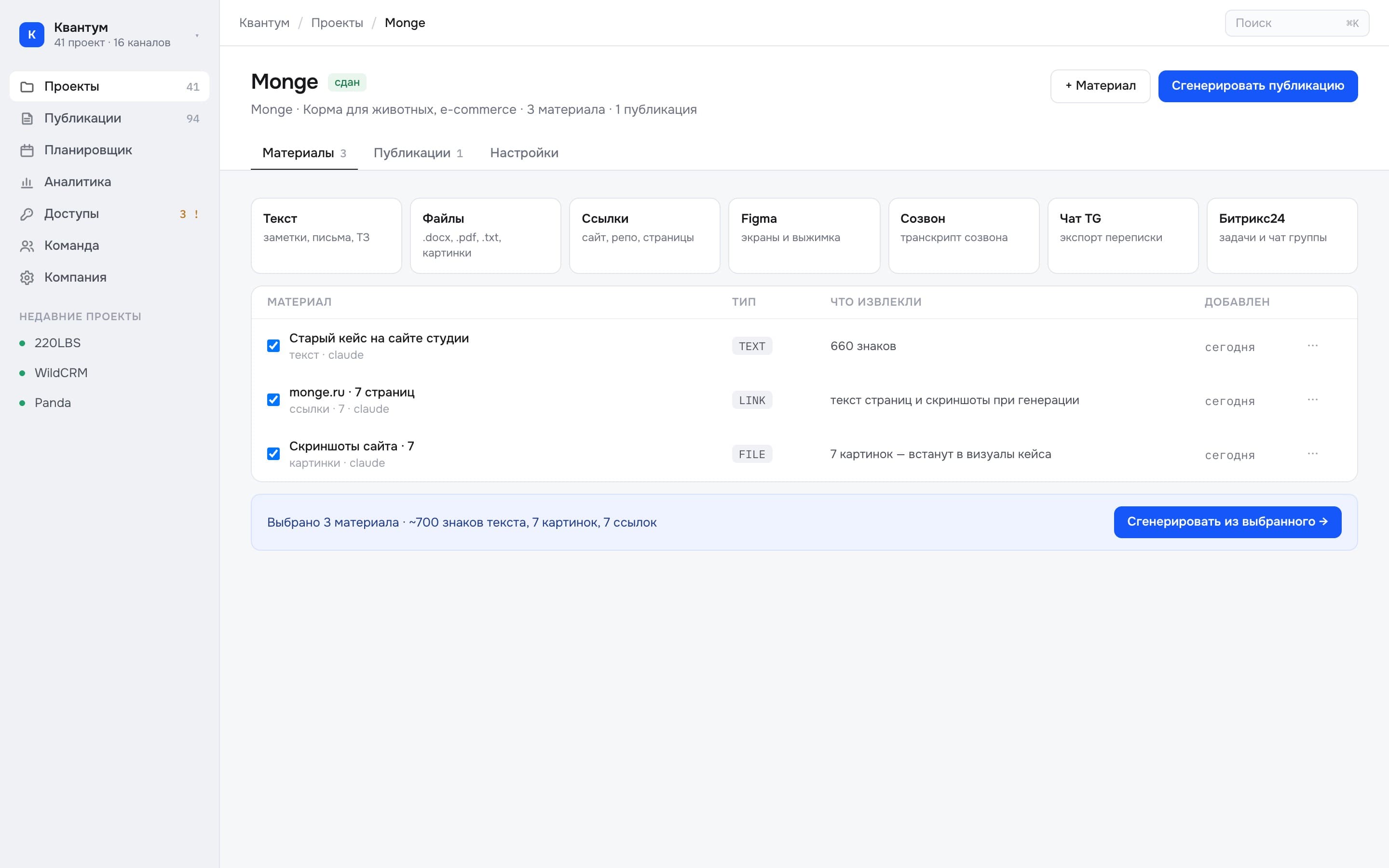
Materials stay with the project
The project card holds descriptions, links, Figma screens and product screenshots. Sources stay next to the publications, so the team can return to them when preparing the next piece.
From links, the factory extracts text and takes screenshots of pages, first closing cookie banners and city selection pop-ups. From Figma, it picks the latest versions of meaningful screens and skips utility ones. The editor chooses which materials to use.
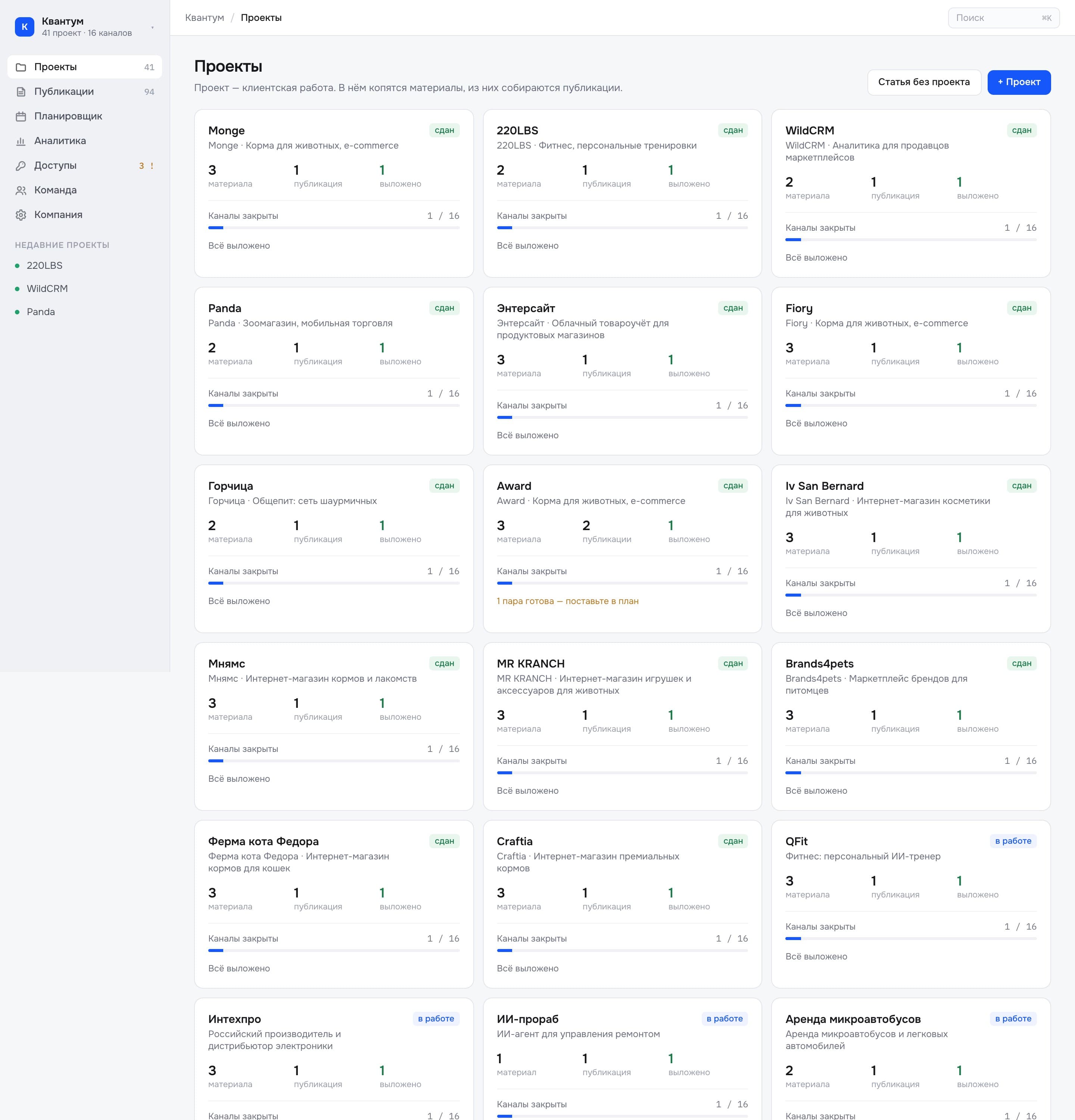
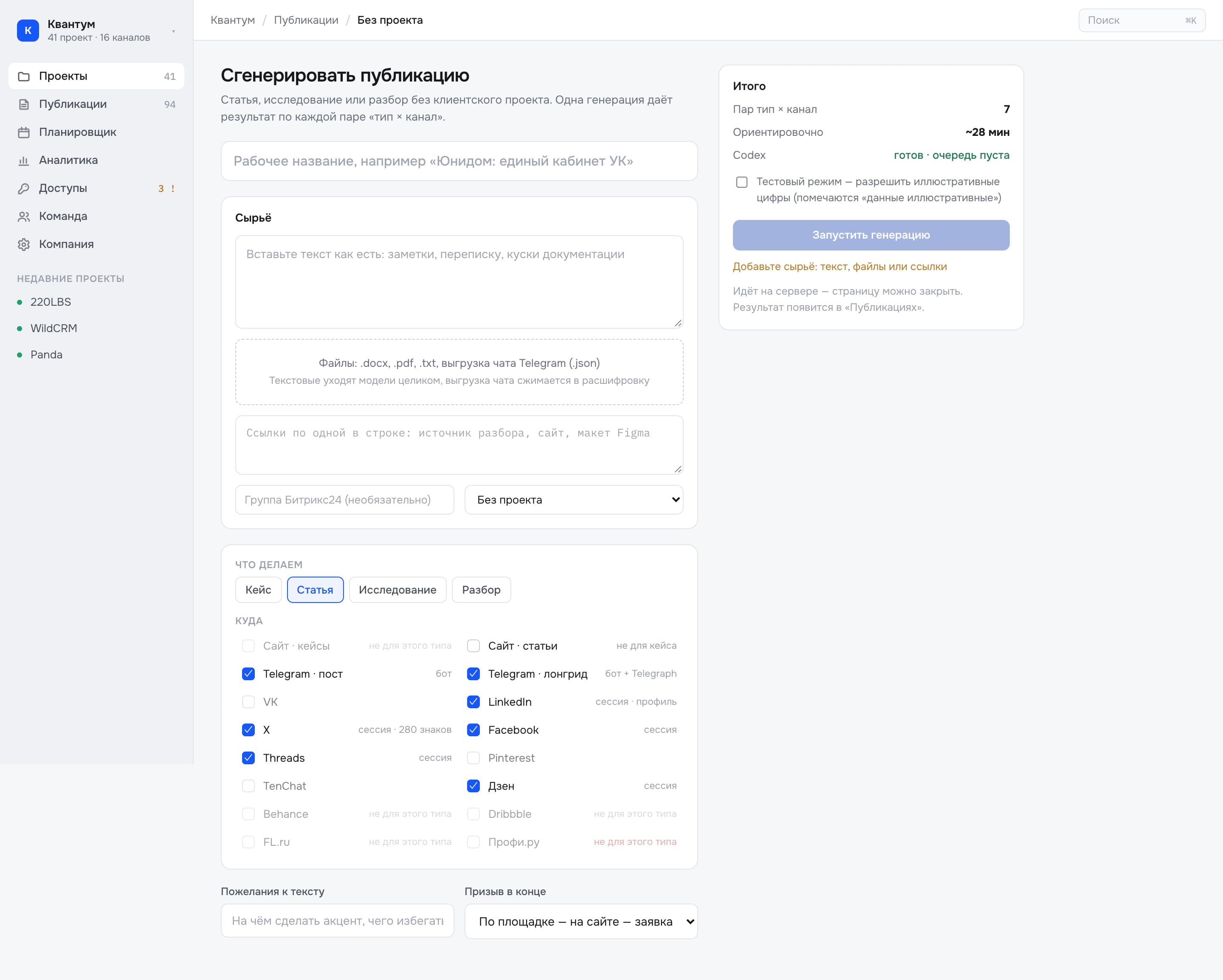
One basis for every platform
First, the service breaks the raw material down into a dossier: it collects facts and screen captions. Generation becomes available only after the editor approves it. All texts about the project rely on the same verified basis.
Next, the editor chooses the content type and channels. The factory prepares a separate result for each “publication type × channel” pair and supports 16 channels. An article, a research piece or an analysis can also be created without a client project.
When writing a text, the model receives the product screens themselves. Covers are also built from real screens, with devices and the project’s colors. If there are no screens, the service creates an illustration of the subject.
The editor controls the content
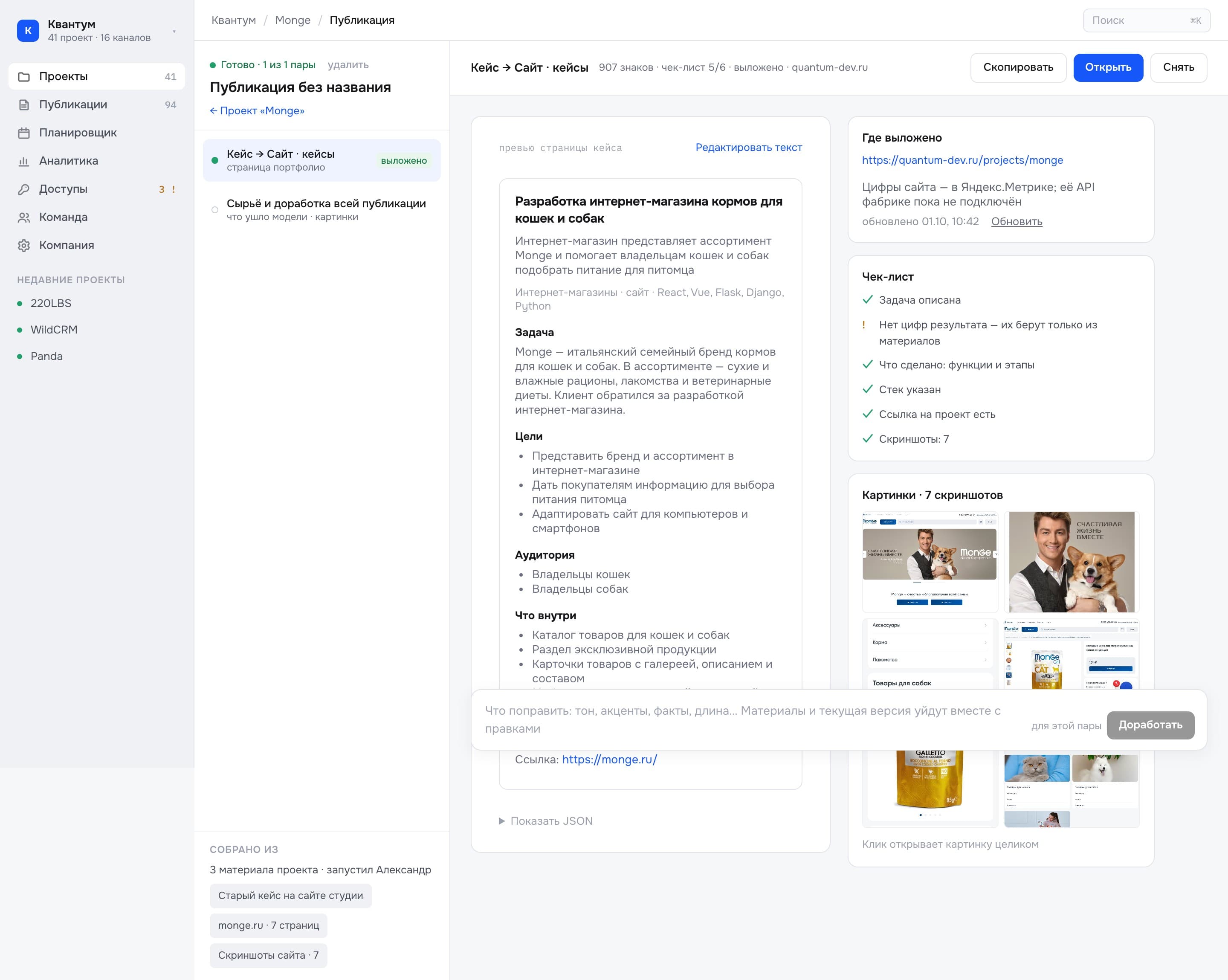
The publication page shows the text, screenshots and a quality checklist side by side. The editor reviews the result and leaves a comment to request changes. A link to the published piece is also available here.
For confidential projects, we added client hiding: the name disappears from the text, the page URL and the “Client” line. This also works for case studies that are already published. Text preparation is set up to exclude third-party companies, amounts and personal data.
Posts go out on schedule
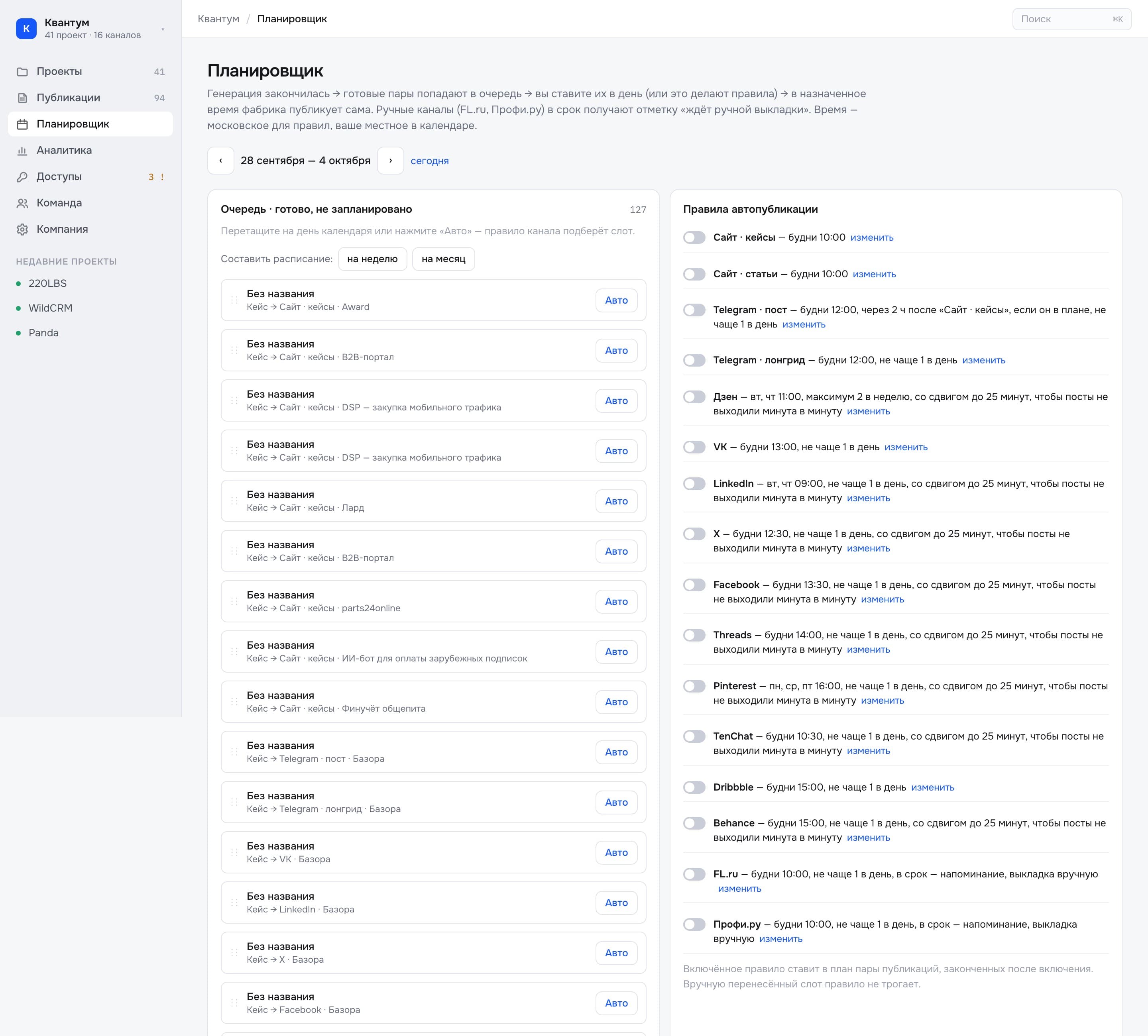
Finished materials go into a queue. The scheduler spreads them across days according to each platform’s rules: posting time, frequency and intervals between posts. The team can assign a slot automatically and gets reminders for platforms that require manual posting.
The studio’s website is connected to the factory. It receives case studies as ready-made blocks — with a cover, a gallery and a permanent project URL. The team doesn’t have to build a page by hand for each new case study.
The service also lets the team take publications down and view statistics by channel. Content preparation and publishing management stay in one place.
Technical details
Technical details
The service is built on Next.js 16 and TypeScript. A language model writes the texts and analyzes the materials; Chromium and puppeteer-core handle web pages. The stack also includes Docker and file storage.
We moved the studio’s website from Tilda (a website builder) to our own stack and connected it to the factory via API. Telegram and Telegraph receive posts through a bot; social networks receive them through APIs or saved browser sessions. Keys and sessions are stored encrypted, and access to the service is role-based.
Goals
- Gather scattered materials into project cards
- Prepare publications based on editor-approved facts
- Automate content preparation and posting for different platforms
- Publish confidential projects without revealing the client
Target audience
- Studio editors
- Studio staff who prepare materials and maintain the portfolio
What users need
Job to be done — from situation to outcome
I gathered project materials from descriptions, mockups and screens and wrote case studies by hand. The portfolio was going out of date, and there weren’t enough people for new posts.
I want to keep the portfolio up to date and talk about projects on different platforms while keeping control over the facts and client confidentiality.
Materials are stored with the projects. I check the shared factual basis, and the service prepares texts for the selected platforms and posts them to the automated channels.
What’s inside
Descriptions, links and screens stored by project
Automatic collection of website text and screenshots
Fact dossier with mandatory editor approval
Generation for each “publication type × channel” pair across 16 channels
Covers based on project screens
Quality checklist and text revision via comments
Client hiding, including in published case studies
Publication queue and scheduling by platform rules
Automatic posting and reminders for manual platforms
Unpublishing and view analytics by channel
User roles and encrypted key storage
Need a similar project?
Tell us about your task — we’ll estimate the scope, timeline and cost and propose a solution.
Other projects
See all projects
The DSP brings together the spend and results of mobile traffic buying, so advertisers and agencies can evaluate campaigns without compiling reports by hand

Quantum Dev’s internal game-style dashboard shows each project’s path from assignment to payment and counts accepted work toward the developer’s personal progress
A platform for tracking contractors, contracts and documents, with e-document exchange via Kontur.Diadoc